Howdy Families, Parents, Walkers, Runners, Cyclists, Rollers, and Neighbors,
In ecology, scientists monitor an indicator species—like a specific frog in a pond. If the water becomes toxic, the frogs disappear first, warning us that the entire ecosystem is struggling.
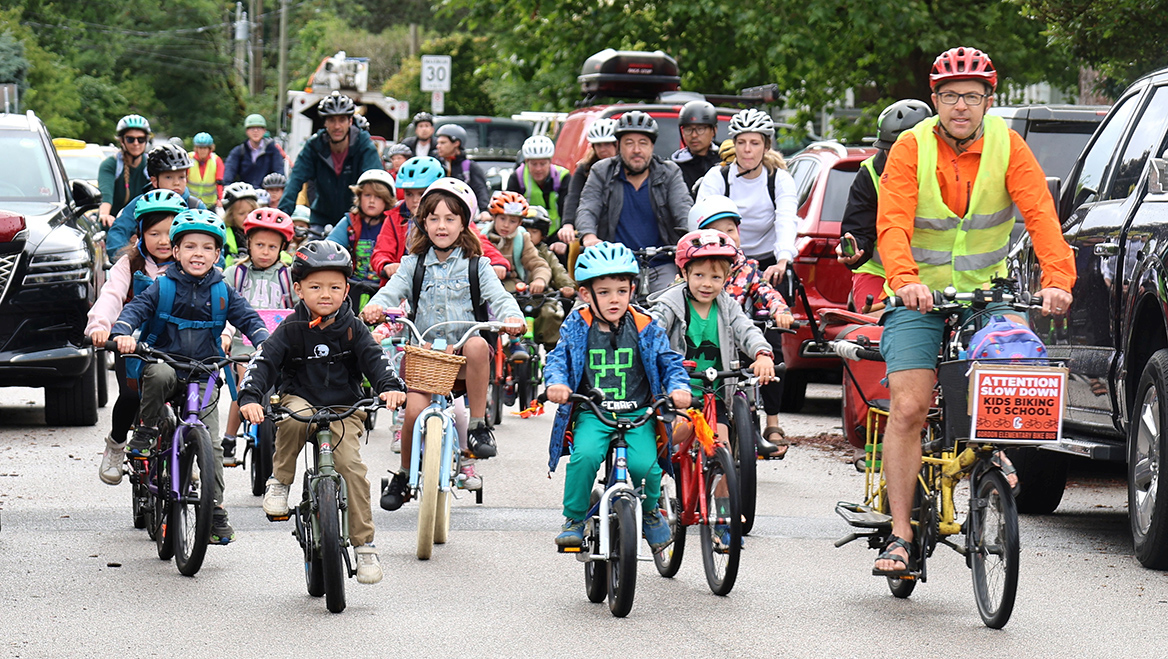
In urban planning, our children are the indicator species.
Because our city’s legacy infrastructure was built primarily for the automobile, our kids are increasingly isolated, and our parents are exhausted. We are forced to spend our afternoons acting as full-time chauffeurs, ferrying our children across busy intersections in cars just to reach their schools or parks. If our infrastructure is not safe enough for a school-aged child to navigate autonomously, the ecosystem needs an upgrade.
The City of College Station has put immense effort into drafting the new Active Transportation Master Plan (ATMP). (link) The city staff’s dedication to mapping our future grid is clear, and the current draft contains vital improvements. However, to make this plan truly generational, we need to ensure it explicitly guarantees the safety of our most vulnerable residents.
The original Bicycle, Pedestrian, and Greenways Master Plan was adopted in 2010. Sixteen years is the entirety of a childhood. If we fail to formally mandate this safety narrative now, the next major update won’t happen until 2042. We cannot force an entirely new generation of families to wait that long just to safely cross their own neighborhoods.
Recognizing this, there is currently an effort to add a highly specific policy addendum into Chapter 5 of the ATMP. We are asking the city to adopt the following language:
“Establish a measurable safety baseline by prioritizing the 2-mile walk zone of K-12 campuses, designing at least one continuous Level of Traffic Stress 1 (LTS 1, Low Stress) spine from residential subdivisions to their zoned schools, ensuring these corridors are safely navigable for a school-aged child.“
The ATMP is currently open for public comment, and we need your voices to help get this policy across the finish line.
When you submit your comments, please express your support for the K-12 LTS-1 policy addition in Chapter 5. Then, speak directly from your lived experience to illustrate why this policy is needed:
- Share your friction: Name the exact intersection where you feel unsafe walking with your family. Name the exact road you will not let your child cross.
- Support low-stress solutions: Express your support for pedestrian-first spaces—such as Arnold Road/Hibiscus Street, the Bee Creek Park bridge, and the Lick Creek trails—that connect our dead-ends and keep families off high-speed thoroughfares.
Please take two minutes to submit your comment at (https://www.surveymonkey.com/r/8TJG8Q6) by Tuesday, April 28th.
Ultimately, treating children as our indicator species changes our fundamental metric for progress. It means we stop measuring the success of our city by the speed of our traffic, and we start measuring it by the success, safety, and independence of our children. Let’s work together with the city to build a grid that protects our shared vulnerability.
2 comments on “Help College Station succeed with Children as Indicator Species”